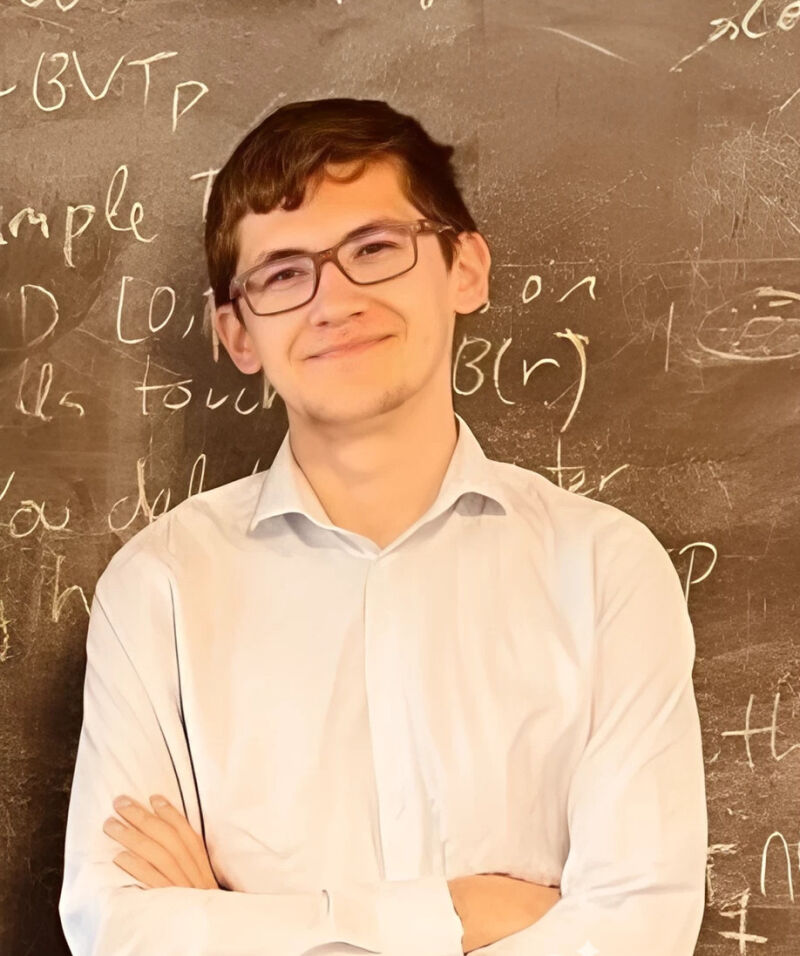
As an engineering student at the École polytechnique in Paris, I was doing a master-level research internship within the COeXISTENCE project, on the topic of coalition games in urban networks. My studies focus on operations research, algorithmics and game theory, and I have a particular interest for networks and transportation. Over the last years, I have followed a pluridisciplinary education that includes physics and economics.
List of main publications and preprints
-
Equilibria in routing games with connected autonomous vehicles will not be strong, as exclusive clubs may form
Kucharski, Rafał,
Psarou, Anastasia,
and Descormier, Natello
arXiv preprint arXiv:2510.12862
2025
User Equilibrium is the standard representation of the so-called routing game in which drivers adjust their route choices to arrive at their destinations as fast as possible. Asking whether this Equilibrium is strong or not was meaningless for human drivers who did not form coalitions due to technical and behavioral constraints. This is no longer the case for connected autonomous vehicles (CAVs), which will be able to communicate and collaborate to jointly form routing coalitions. We demonstrate this for the first time on a carefully designed toy-network example, where a ‘club‘ of three autonomous vehicles jointly decides to deviate from the user equilibrium and benefit (arrive faster). The formation of such a club has negative consequences for other users, who are not invited to join it and now travel longer, and for the system, making it suboptimal and disequilibrated, which triggers adaptation dynamics. This discovery has profound implications for the future of our cities. We demonstrate that, if not prevented, CAV operators may intentionally disequilibrate traffic systems from their classic Nash equilibria, benefiting their own users and imposing costs on others. These findings suggest the possible emergence of an exclusive CAV elite, from which human-driven vehicles and non-coalition members may be excluded, potentially leading to systematically longer travel times for those outside the coalition, which would be harmful for the equity of public road networks.